Monday, July 27, 2015

Potato Batter II, Tilapia II, and the Wirtues of Woodman's

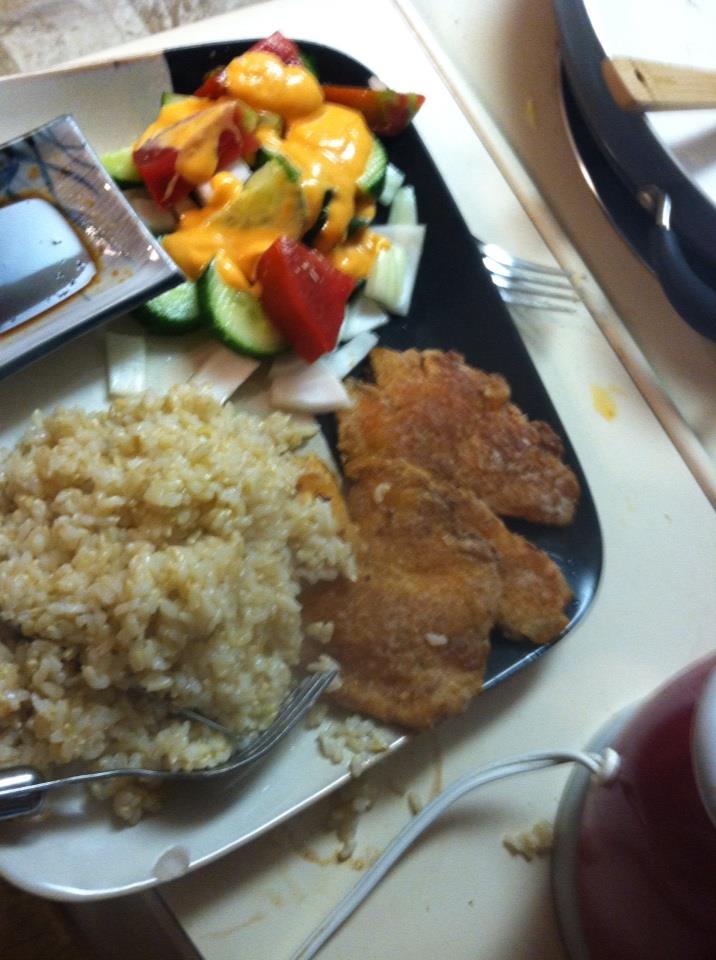
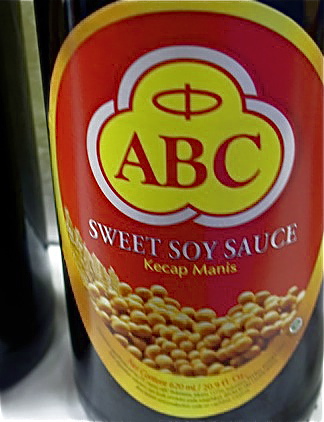
West Coast Guy Made this fish last night. Previously, I tried using a batter of potato starch alone (with swai)--I liked the texture, but it was bland. This time I marinated two small tilapia filets in a marinade of half a Filipino flavored vinegar called Suka Pinakurat and half Indonesian Kecap Manis.


I just discovered this Suka stuff at Woodman's yesterday. It is very strong tasting (ingredients: fermented coco nectar, chiles, garlic, onion, sweet peppers, salt). Kecap manis is sort of like almost too sweet teriyaki sauce, sort of syrupy or even caramel-like. They were a great combo.

After marinating the fish, I then simply coated it in potato starch, and shallow fried it in a non-stick ceramic pan at medium heat. It soaked up a lot of the canola oil, but I suppose that's all good because tilapia is nearly fat-free. You can't tell how good it was from a photo, but it was delicious. I also boiled some of the marinade and then used it as a dipping sauce, but it didn't need the extra flavor really. I was going to have it with a dab of store-bought, mayo based tartar sauce, but I was out.


I could have made a fat-free tartar sauce with Greek yogurt, if I wanted to be extra healthful about it....

(Incidentally, the style of cooking I used was what Japanese do when making karaage, a kind of fried (usually) chicken. It is marinated, coated with some kind of starch, and fried. This will work with tofu too--tried that once.)

Woodman's by the way, is a great place to shop. One can get ingredients and completed products from nearly all Asian cuisines. For finished products, I sometimes get Indian breads (chapati and parathas). One can also get what in Japan is called nikuman, or in Chinese (Cantonese?), siopao or baozi.

The best siopao is pork. It is a guilty pleasure for me because i know it is not all that healthy to eat, but it really tastes good. They have chicken too, but it is nowhere near as good. In the photo on the right, there are plenty of chicken, but no pork, so apparently, I am not the only one who thinks this way--couldn't get any pork yesterday.

Woodman's also has an extensive selection of Mexican food products, and pinatas.

To return to Asian stuff, they are the only store in the region that still stocks soft tofu, and all kinds of tofu and other soy products such as tempeh (which is a bit expensive).


Woodman's has such a variety of Asian stuff that one can get Thai, Vietnamese, or Filipino fish sauce, and hordes of other sauces, canned goods etc. One can, by the way get a brand of fish sauce called shrimp, OR one called squid (and neither has any shrimp or squid!):


Recently, Woodman's added sushi. A vegetarian friend (!) said to me that it was stupid to buy seafood in the midwest, but because I happen to know that even in Tokyo, Tsukiji Market, a lot of the fish is flown in from very far away, buying tuna or whatever in La Crosse doesn't bother me much (the idea of eating too much mercury does trouble me a bit, though). I have bought sushi from grocery stores in the area before, and it is generally not bad (roughly equal in quality to some of the kaiten/revolving belt sushi I had in Tokyo last year, and better than two of the sushi restaurants in La Crosse, both run by Chinese people). I do find it frustrating that the midwest's idea of (marketable) sushi is overly much some kind of outlandish roll that has little to do with Japanese food.


 You can get nigiri sushi (the kind with the fish or whatever on top of a rectangle of rice, but usually in these packages, it also comes with one of those sliced up rolls.


All in all, in any case, I am very grateful that Woodman's is around. That it is employee owned is a plus too. West Coast Guy worries that his '96 Toyota might break down and though he can walk or bike to work or shopping, Woodman's would be too far away to get to easily, unless he goes into debt and gets another car.


Tuesday, June 2, 2015

Rudy's Drive In

West Coast Guy (WCG) just went to Rudy's Drive In in La Crosse. It's one of those apparently La Crosse (and Sparta, WI, where apparently, there's another one) only kinds of things, like the Rivoli theater, where one can watch newly released films while eating pizza and having the beverage of one's choice (looks like they have pretty much a full bar). WCG likes the root beer and the Thai shrimp pizza best.

Rudy's is a drive in like from the 1950s, complete with girls on roller skates taking orders from cars.

Notice the embroidered poodle on her skirt
One weird thing (but not weird in whacky La Crosse) is that the place closes through the winter months, opening only in late spring and closing in early fall.

I have had their fish sandwiches before, as well as their pork chop sandwich. Both were good. WCG's friend Professor π likes their fish sandwich, but not their fish dinner for some reason. A couple weeks ago, WCG had their turkey burger, and it was quite good. WCG was very much looking forward to trying their buffalo burger today, but it was a disappointment. The patty was pretty much tasteless. WCG also had onion rings, and they were "nothing to write home about."

Oh well. Next time, WCG eats out, it will probably be Hmongs, and there will probably be a post about it.
Buffalo Burger


View of Rudy's sign looking west down La Crosse Avenue, towards the muddy Mississippi 

Sunday, May 31, 2015

Potato Batter

Tried an experiment tonight with a swai filet. I cut it into pieces and coated it with a batter of ice cold water, potato starch, and seasonings.

The texture was fascinating, and it looked like a fritter or something. It kind of reminds me of freshly made satsuma age, a kind of fried fish cake from Japan. It was chewy and crispy at the same time.  In the past I have mixed potato starch with some kind of flour, but this pure potato starch batter was good. Next time I will season it more, however.

I think I will also add thinly sliced strips of onions and carrots to the batter next time....

satsuma age

Misoyaki Tilapia Fish


This is one of my favorite things to make/eat. It is misoyaki tilapia. I marinate tilapia filets in a mixture of miso, mirin, fish sauce, and a little agave syrup, with some spices such as chipotle, onion, and galanga powder, and then just cook it in a small amount of oil in a pan.

It is based on what in Hawaii they call misoyaki butterfish.  Butterfish is the mystery meat of the sea, it seems, but it most likely refers to black cod.

Misoyaki Butterfish from Roy's Hawaiian fusion place


At any rate, one cannot get black cod in La Crosse, but tilapia is pretty good this way. That night I had genmai or Japanese brown rice (my usual).  When I was in Japan a year ago, eating out all the time, I missed eating lots of veggies and brown rice. Ironically, I suppose, Japan was where I first learned to like genmai, but that was a long time ago when I lived there, had my own rice cooker, and cooked a lot for myself. With the tilapia above, I also had a little green salad with chopped red bell pepper pieces and cashews dressed with sriracha mayonnaise, which I got from the Indochinese Grocery Store a couple blocks away from my apartment. There's a few Hmong groceries in La Crosse, but they never call themselves Hmong for some reason. I also had some pickled/marinated radishes.

There's the kind of mayo I got on the right. I will do a future post dedicated to the Hmong presence in La Crosse, for which I am exceedingly grateful. I will also "review" Hmong's Golden Egg Roll, which just reopened after about a year's hiatus. A preliminary remark: the place has been constantly packed since it started up again about 3 weeks back. There are Hmong and other Asian patrons of course, but it is always about half white people, which kind of does my heart good to see. It is good to see Wisconsin white people--like the guy in a beard and hunting cap I saw there last week with his little son--trying and liking something like what they serve there.
Before reopening--nice sign


Thursday, September 5, 2013

Super Easy Pickled/Marinated Carrots and Daikon (AKA Vietnamese do chua or Japanese red and white namasu)

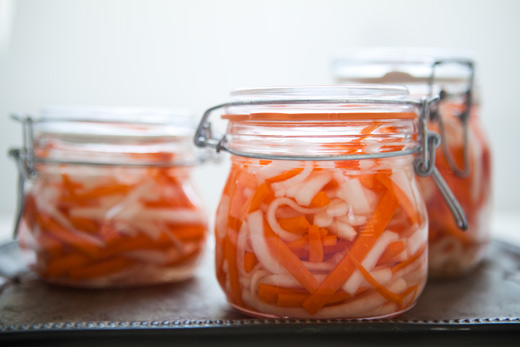
Homemade namasu carrots and daikon / do chua on my kitchen counter

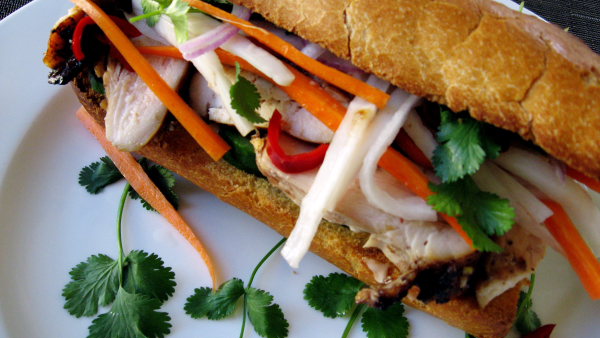
Here's a super easy recipe for pickled/marinated carrots and daikon (Japanese white radish).  It is what Japanese call kōhaku ("red and white," with orange categorized as a kind of red) namasu ("raw vinegar," with "raw" referring to the uncooked vegetables and "vinegar" referring to what flavors them and alters their chemistry) 紅白生酢 .  It is also more or less the same thing as Vietnamese do chua, one of the delicious things inserted in French bread (albeit baked with rice flour) to make banh mi sandwiches.

http://laviesoleil.com/wordpress/wp-content/uploads/2009/02/chevre-day3.jpgBesides in banh mi, West Coast Guy (WCG) likes namasu /do chua with rice, and to eat it with some kind of meat or fish (see tilapia recipe below).  But it is great on toast or crackers with some cheese, for example chèvre (goat cheese).  Whenever I make these veggies (using local small, Hmong farmer versions of daikon so far), and share them with others (non-Japanese, non-Vietnamese), they eat a lot of it....  It is very good.

Here's a way to do make it:

Buy what in English is called "seasoned gourmet rice vinegar," made by Marukan or some other company.  The Japanese says, "sushi su," which means sushi vinegar.  This is because it is rice vinegar to which they have added some salt and sugar.  This is "whole food" stuff (as I recall, having used up my last bottle a couple days ago to prepare the vegetables pictured above): just vinegar, salt, and some sugar.  It is the formula suitable for flavoring rice to be used in making sushi.

The next super simple step: put julie-anned carrots and diakon into some kind of container.  I use freezer, microwave, and dishwasher safe sealable plastic ones.  Then pour the vinegar, covering the veggies.  Next, put it into the fridge, and wait a while.

After a few hours,  the carrots and daikon will very much absorb the flavor from the vinegar, etc.  After a day or two, it will take on a more pickle-like taste and fragrance.

Note: if you don't have, cannot buy, or run out of "seasoned gourmet vinegar" (you can buy it at most grocery stores, even in La Crosse), you can just add some sweetener and some salt to vinegar.  It is that simple.  When I ran out - not having quite enough - recently,I added some agave syrup and salt to some un-seasoned rice vinegar, and it tasted great.


Sunday, September 1, 2013

La Crosse Food Cart Boom?

You know you live in a small town when two of something constitutes a "boom": http://lacrossetribune.com/news/local/food-carts-popping-up-around-la-crosse/article_3afa51e2-c593-11e1-90da-001a4bcf887a.html

Cooking With Tofu I: Don't Fear the Tofu


http://www.asianfoodgrocer.com/img/prods/categorie-images/tofu-catagory.jpg
Tofu is coagulated soy bean milk pressed into blocks; it is sometimes referred to as soy bean curd.  In East and Southeast Asia it is a common food, where although associated with vegetarian Buddhist monks and nuns, the vast majority of omnivorous populations eat it as as a "normal" food.  In fact tofu dishes are often flavored by small amounts of animal products such as bits of pork or fish stock (animal proteins were traditionally a luxury and the modest inhabitants of the non-West are often bemused by Westerners who can afford to eat them but choose not to do so); it is - by the way - difficult to be a strict vegetarian in urban (East and Southeast) Asia, especially if one eats out at all.

Tofu is sometimes called something like meat from the fields because it has long been recognized as a source of high quality protein.  In fact, soy products are some of the very few vegetarian/vegan/vegetable sources of the complete set of essential amino acids that we all need.  Some say it is flavorless and it is indeed not strong in that department, but it does in fact have a subtle flavor.  Nonetheless, it also takes on the flavors one adds to it rather well, absorbing seasonings, sauces, broths, etc., well.  It is very versatile, and thus fun to cook with.  It is almost impossible to overcook, which is conversely very possible with most animal sources of protein.

Of particular note is that tofu comes in a variety of textures, densities, or levels of hardness.  In the US - where one can purchase packaged tofu in most supermarkets - there is generally soft, firm, and extra firm.  For most cooking applications, firm and extra firm are most appropriate.  Soft is good for salads and eating uncooked with some kind of sauce.  People use it blended to make sauces, deserts, etc. 

(Note: Tofu is available in the La Crosse area at Woodman's, the Co-op, Hmong supermarkets, and Festival.  However, the tofu at Festival is inappropriately and oddly EXPENSIVE.  West Coast Guy [WCG] suspects this is because whoever makes such decisions for Festival unwisely categorizes tofu as "health food," and thus associates it with the generally higher income people who have the luxury to buy items categorized in that way.  The long and short of it is that unless one has "money to burn," it is better to buy tofu elsewhere.)

Hiyakko Tofu
Kimchi Tofu

 There are innumerable ways to cook/prepare tofu, and WCG has tried many of them.  Examples common in Japan that don't require cooking include kimchi tofu, which is Korean style pickled cabbage and other vegetables on top of cold soft tofu, and hiyakko tofu, which is soft tofu usually topped with katsuo (dried bonito fish) shavings, shoyū (soy sauce), and green onions, etc. If one is hungry and wants a simple tasty protein-heavy dish, WCG recommends slicing up some soft tofu and pouring on some sauce: soy, sriracha, tabasco, flavored vinegar, whatever.  (Ponzu sauce works exceptionally well - available at Woodman's in a bottle) One can add green onions, tomatoes, pickles, etc., too.  This tastes good with rice or alone.

http://marbotea.up.d.seesaa.net/marbotea/image/A5DEA1BCA5DCA1BC4.JPG?d=a21
Mābō dōfu teishoku (set meal) in Japan
Common cooked tofu dishes in East Asia include Mápó dòufu, a  Sichuan (Szechuan) Chinese dish that is very popular in Japan, where it is called mābō dōfu.  This is a spicy dish that usually includes chiles, garlic, minced pork, and soy bean paste.  Another dish in Japanese is called buta dōfu, which simply means pork tofu.  WCG's mom used to make this as an every day dish.

Buta Dōfu (Somebody else's mom's (or auntie's) recipe)


The most common way WCG cooks tofu is in a pan or skillet.  This generally means a kind of stir fry, cooking the tofu with onions, carrots, garlic, and or other vegetables, along with a mixture of seasonings balancing salty, spicy, sweet, and perhaps sour flavors.

Recently, WCG's culinary experiments have led to the realization that cooking the f&#^ out of tofu leads to good results.  Again, it is almost impossible to overcook the stuff, and when browned to the point of almost blackening, the tofu undergoes caramelization, the maillard reaction, or something like that.  The end result is that it tastes good.  Another method WCG has been experimenting with is marinating the tofu for hours before cooking it.  The marinade can consist of a variety of ingredients, but the WCG goal is to achieve - again - something of a balance of flavors including at least salty and sweet, and often spicy plus sour.

Ikeda Kikunae
Actually, WCG's goal with savory cooking is to achieve or find what in Japanese is called umami, but that is the subject of another post.  Suffice it to say that this culinary certain something (je ne sais quoi) taste comes through "cheating" with MSG or some MSG containing substance such as Japanese Hon Dashi (and MSG was invented by Japanese scientist Ikeda Kikunae in 1908 to essentially bottle umami), or one can get it from substances such as, for example, miso and fish sauce.  WCG has also noticed that umami comes from slow cooking vegetables in a pot until their juices flow.  A little salt and pepper facilitates this, and for some reason this works much better in a high-sided pot than in a pan.  WCG also suspects that something like umami results from the proper balance of flavors such as salty, sweet, spicy, and sour, which is the the essence of, for example, good Thai cuisine.

http://farm5.staticflickr.com/4048/4626151364_f37a884787_z.jpg
Hawaiian miso
Pictured below is a tofu dish WCG made a couple months ago.  It features big tofu slabs (the packaged block sliced once down the middle) marinated overnight in a mixture of Hawaiian Miso and Canadian maple syrup.  WCG also threw in some Mexican chipoltle powder and some Vietnamese fish sauce.  WCG fried the slabs in fresh Wisconsin butter from the "Norwegian" town of Westby and then made a sandwich with the pan-fried tofu, fresh baby spinach, tomato, sliced onions, and his homemade Greek yogurt-based sauce as a condiment.


Frying tofu in pan (note extra WI butter on top)

Open faced tofu sandwich (and man, it was good!)


PS: Another great tofu dish is Japanese age dashi dōfu, which is soft tofu coated with corn or potato starch and fried, and then served in a broth of dashi (generally katsuo/bonito fish stock) flavored with a little mirin (sweet cooking wine) and maybe some shoyū.  It is then topped with daikon oroshi, which is daikon grated into a sort of paste, along with green onions, katsuoboshi (shavings of dried bonito fish), and/or grated horseradish.

https://blogger.googleusercontent.com/img/b/R29vZ2xl/AVvXsEiEfQW72BphVmohuuciSnIVuFvFQqvNpO9rlhRMtdQWUPmPuCiUy4_fzvNhey0vBYMZljkrEHOB-uWBy8gEspLDH_UmXhlN-eJPSa55TOB7tOSbvxtEQ5svdBV94EB4ZkXYDLtoXbmqz9o/s320/Agedashi+Tofu%255B%25244.80%255D.JPGhttp://www.webjapanese.com/archive1/albums/userpics/10001/normal_daikonoroshi4.jpg
Agedashi dōfu and daikon oroshi on its own

http://www.edenbrothers.com/store/media/Vegetables/Radish/ss_size3/Radish-Daikon.jpg
Daikon
Daikon is a giant white Japanese radish, which is available in La Crosse supermarkets/grocery stores.  Its name literally means "Big root" 大根. As such, if one buys it it inconveniently takes up much space in the fridge.  However, WCG recently discovered Hmong farmers selling small daikon at local farmers' markets, but being about the size of carrots, they are somewhat of a misnomer (maybe "small root" or shōkon 小根?  I suppose there's words for the small kind in Southeast Asian languages...).  They taste like daikon though.

Sunday, August 25, 2013

Cooking Tilapia I: Simple, Pan-Frying

Note: For West Coast Guy (WCG) this piece is a very basic beginning to a series of posts on ways of getting by in a culinary sense in a small, homogenous town in the upper Midwest.  There are no Thai, Korean, Vietnamese, Indonesian, African, or Middle Eastern restaurants.  There are many places that serve very bland food (and for lunch, lots and lots of  boring and/or unappetizing sandwiches), and there are a couple of places serving Japanese and Indian food, all of which can be of dubious quality at times.  WCG hasn't had much luck with Chinese food either (got buffets?).  The saving grace of the La Crosse area is that shopping at especially either the Coop, Woodman's, or Hmong supermarkets, one can acquire most of the same ingredients that one can purchase in urban areas and on the coasts.  With imagination, experimentation, previous knowledge and information from the internets, one can learn to cook some pretty good things in WCG's opinion.

Pan-Fried Tilapia


Frozen, farmed tilapia is ubiquitous these days.  It is also - they say (whoever they are) - very healthy,  sustainable, and relatively inexpensive.  It does, however, have its drawbacks.  It is relatively bland (which is a plus for those who don't like the taste of fish, I suppose, but not for West Coast Guy), and it is extremely fragile.  In fact, if one just throws a thawed but previously frozen, seasoned tilapia filet into a pan and fries it in a little oil or butter, it might even get a little mushy, unlike a fresh piece of salmon, for example.

Much experimentation has led to a couple of "tricks" for WCG when it comes to cooking tilapia filets that are fresh from the freezer.  First defrost, which can happen after many hours in the fridge or several minutes under running water or soaking in water.  In every case, the filet(s) should be enclosed in a plastic bag.  After the fish is thawed, wash it, and then dry it with paper towels.

Pan fried tilapia with Japanese brown rice, lime quarters, and lettuce
Then, for the method with the result pictured here, it is simple: season with salt and whatever else is handy (the example pictured here has chipotle powder, dill, and basil), and then rub some kind of flour on the fish.  One can use rice flour, wheat flour, corn starch, whatever....  WCG uses whole wheat or brown rice flour.  Then fry in a pan in a little oil at medium to medium high.  Turn when you can see the browning start to make its way up the sides of the pieces.

(Note: rubbing the filet with flour will give it structure, counteracting the overly fragile or even mushy tendencies of frozen tilapia.  The resulting texture makes it a much better dish than it otherwise would be.  But it is very important that the fish and the flour are dry.  Recipes call this technique "dredging," which usually means having a lot of flour in a bowl or dish or pile and sort of dipping the fish or chicken in the flour.  My way - rubbing - reduces the amount of flour one uses, as well as mess and cleanup.  Whatever you do, make sure the fish and flour are dry and that you do not have too much flour adhering to the fish; it should be a thin layer.  Otherwise, it will be coated with gummy cooked flour.  PS: I am sure deep fried tilapia, either breaded using flour, eggs, and breadcrumbs or with a batter is quite good tasting, but this way one uses less "bread" and oil, and it is thus healthier and easier, while in WCG's estimation tasting quite good.)


After cooking, if one wants, one can serve it with some kind of homemade or store bought sauce.  Tartar (white or red) works.  Other suggestions: Thai chile sauce, Indonesian kecap manis, sriracha sauce, fish sauce or soy sauce, or any combination of the above.  Homemade versions of "" or "rémoulade" or "aioli" (which can be as simple as mixing mayonnaise with whatever strikes one's fancy) can be good too, as well as eating the tilapia with some crispy marinated vegetables along the lines of Vietnamese do chua. 
Do Chua (Vietnamese marinated/pickled carrots and daikon)
A little squeeze of lemon or lime is also always good.

(One type of possible condiment for this fish involves Greek yogurt and various seasonings - a kind of 100% healthy and fat-free tartar sauce, but that is the subject of a later post.)

http://upload.wikimedia.org/wikipedia/commons/f/f5/Korean_condiment-Ssamjang-01.jpg
Ssamjang
Today, I had my tilapia with a squirt of fresh lime and wrapped in a lettuce leaf Korean style with a little ssamjang, which is a spicy, seasoned fermented soy bean paste, a peppery version of what in Japanese is called miso.  La Crosse residents can get it at one of the Hmong stores, such as Indochinese Grocery Store, downtown, near Western Technical College.  Tilipia, of course, is available at Festival and Woodman's.


PS: Variation on the Theme

http://www.prosi.at/admin/Product/chinese-five-spices-powder-ngo-hiong.jpg
This was the brand....
Last night WCG made the fried tilapia as above with a slight variation: instead of just salt and pepper, I used salt and Chinese 5 spice seasoning.  Then I put whole wheat flour on it as above and fried it.  Then WCG and a friend ate it with marinated veggies, a fresh farmers market tomato with something like Miracle Whip (another brand, without the corn syrup), and something called Dragonfly Chile Sauce for Fish, a green bottled sauce bought at Indochinese Grocery Store.  This sauce has green chili, garlic, cilantro, lime juice, vinegar, fish sauce, salt, and sugar.  Together with brown rice, the fish in 5 spices with dragonfly sauce tasted like absolute heaven....

http://31.media.tumblr.com/tumblr_ltkyj3HY2M1r5sfy6o1_500.jpg
Very bitter melon
(Incidentally, WCG tried cooking bitter melon for the first time last night, in a stir fry, and did not like it.  Too bitter.  WCG's palate does have limits it seems....)

Tuesday, August 30, 2011

Bamboo House

(608) 781-6996
9374 State Road 16
Onalaska, WI 54650

Menu

Why is it that every restaurant in the La Crosse area that serves Japanese food is run by Chinese people?  This is the case with Bamboo House, as it is with downtown La Crosse's Yoko's Place.  But in any case and in West Coast Guy's (WCG) opinion, there is no reason why Chinese people cannot make good Japanese food, or Italian food, or whatever.  Same with White people and everybody else.  Culture (including cuisine) is not in the blood or genes or whatever you want to call it.

But in the actual case of Bamboo House there are some shortcomings that WCG has encountered that may have something to do with Chinese people running a restaurant that purports to serve Japanese, Thai, AND Chinese food.

(true) Yakitori with green onions / ネギマ焼き鳥
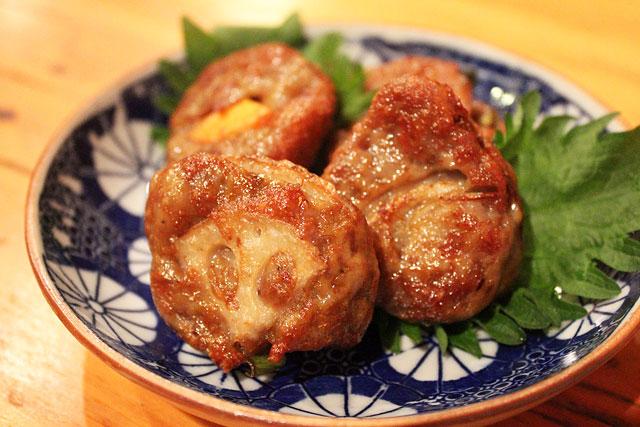
One thing - for example - is pretty funny.  The menu lists "yakitori beef" as an entree.  "Yakitori" is Japanese for "bird cooking," which generally refers to some form of chicken grilled on a stick (WCG's favorite is tsukune, or grilled chicken meatballs or sausage on a stick).  Again, funny, but an indication that these people do not really know things Japanese.  

A more serious error arises when one orders "tempura" at Bamboo House.  Tempura is deep fried food, usually including shrimp and various vegetables.  (However, WCG's Nisei mom used to make tempura with bits of leftover beef and potatoes, and sometimes in Japan they make it with scallops, fish, squid, etc.).  The word "tempura" is written in Japanese with a Chinese character (kanji) that means heaven, i.e., nothing to do with shrimp, and the word/dish has its origins with Portuguese visitors to medieval Japan who would temporarily (get it?) abstain from eating beef, pork, or chicken during Lent.

Actual tempura / 天ぷら
What really defines tempura - in any case - is the batter.   It is a light batter that includes cold water, flour, and eggs.  The batter is only loosely mixed just before use, giving tempura its distinctive qualities.  Tempura is NOT breaded.  But the good people at Bamboo House either don't know this or don't care.  They seem to be banking on the fact that La Crosse people are not sophisticated enough to know the difference.  (By the way, at Yoko's Place, they serve up the same kind of "tempura.")  Breaded and deep fried food in Japan/Japanese is called "furai" (Japanese pronunciation of "fry," so for example fried shrimp would be ebi - Japanese for shrimp - furai).  ebi furai and other kinds of food in Japanese cuisine that is breaded can be very good (an example would be tonkatusu), but it is not
tempura.

Ebi furai (fry) / 海老フライ

I miss real tempura, don't like to deep fry at home, and would have to drive to Madison or the cities - probably - to get it.

To be fair, Bamboo House's sushi is pretty good.  Perhaps the sushi guys are Japanese?  In any case, they seem pretty well trained.  And Bamboo House has all the standard kinds of sushi.  They also include sabazushi, which is a nigirizushi (the kind with a square piece of rice and something on top, not a roll) topped with cured mackerel.  WCG is very, very happy that they have this.  The way they do it is actually specific to western Japan (not Tokyo) and it is more or less like WCG's aunties back home make it.  

But there is a problem here too.  on several occasions, WCG has ordered sabazushi for takeout - often being careful to say it in Japanese and English and specify the number Bamboo House's menu gives it - and yet instead Bamboo House's manager (owner) has handed him a paper bag that includes sake (salmon) topped nigirizushi instead.  Sake (and yes it is written the same as the stuff you drink) is fine, but it is NOT Saba.
Sabazushi / さばずし
WCG has surmised that these people do not really understand what is on their menu.  Which is too bad because some of their food is pretty good.

In addition to the above, WCG has sampled Bamboo House's teriyaki (chicken and beef), orange chicken, Thai and Vietnamese egg rolls/spring rolls, gyoza (which they misspell in their own menu as "goyza") - something non-Jewish people eat?), sunomono (a kind of salad with a Japanese vinegarette), and "honey walnuts shrimp."

All of this was passable or good (unless one has a problem with the heavy and thick breading on the orange chicken), with the exception of "honey walnuts shrimp."  Back where WCG used to live, a Chinese restaurant made an identically named dish, and it was pretty good.  Bamboo House's version is disgusting.  The shrimp was heavily breaded, which comes with the territory; the problem was the sauce, which reminds one of vanilla pudding.  One day last winter, WCG ordered this for takeout.  WCG loves shrimp, and the dish is not cheap.  But it was simply inedible.  It went to waste.

Note: WCG loves Thai food, so he was - as one might expect - thrilled to hear that Bamboo House's menu includes Thai dishes.  Unfortunately, these are not really Thai at all.  They are vague (at best) approximations of Thai food made by - apparently - Chinese chefs who do not bother to find out how Thai food is in actuality made.  For example, in their various "Thai" curries, they use corn starch to thicken the sauce, which is a very common "trick" with Chinese cuisine (at least in North America).  This is in my experience never done with actual Thai curries, which tend to be not thick at all, but almost soup-like in consistency (but not flavor).  The stuff at Bamboo House is not horrible, but it is not great, and it is certainly not Thai.

WCG has not tried what Bamboo House and Yoko's call "hibachi."  On the coasts and in Japan this style of cooking is called teppanyaki, which means cooking on a flat griddle, which is what it is (sometimes, Wikipedia deserves some credit, as here, where the article points out some confusion).  This is not a very traditional - or popular - style of cooking/kind of food in Japan.  It was invented to more or less serve occupying Americans in the wake of Japan's defeat in 1945.  In the 1960s a Japanese expatriate living in New York named Rocky Aoki introduced the US proper to teppanyaki with his Benihana's of Tokyo restaurant, which is now fully an American company run by Americans, that has franchises across the planet (nearly everywhere except Tokyo or Japan in general).

Teppanyaki (AKA "hibachi") cooking is not about the food.  One is paying for the show, which means the tricks the chefs do as they cook your beef, shrimp, chicken, and vegetables at your table.  WCG's parents would take him to the Benihana's back home when he was a kid, on special occasions, and it was fun, but as an adult, WCG is not much interested in such things.

Teppanyaki, the Benihana's experience


All in all, Bamboo House has some positive qualities.  The sushi is good, and so are the appetizers and some of the entrees.  But beware of "honey walnuts shrimp" and whatever other unpleasant surprises are on the menu.

PS: one more peeve: Bamboo House has chicken satay on their menu.  This is a Southeast Asian chicken on a skewer dish that is often featured as a starter at Thai restaurants.  In Thai restaurants it is served with two condiments: a peanut sauce made with coconut milk, and a sweet and spicy vinegar with cucumbers and maybe red onions in it.  Bamboo House's menu says that it comes with the peanut sauce (and not the other thing, fine....).  Grilled chicken with peanut sauce is delicious.  So what if it is not satay in the Thai sense (where the chicken meat is marinated in coconut milk).  But, the people at Bamboo House don't seem to ever read their own menu because WCG didn't get his peanut sauce with takeout once.  The next time he ordered satay, he tried to make sure that the peanut sauce was included, and the owner/manager wasn't even aware that peanut sauce comes with satay - in general, and according to his own menu....

Chicken Satay With Condiments
PPS: WCG went to Bamboo House on a special day for him and got a lot of sushi.  The rice was not seasoned enough.  To all who purportedly prepare sushi: sushi rice is NOT a kind of rice.  It is just plain old Japanese short grain, somewhat sticky, somewhat unhealthy, white rice.  (At La Crosse's misnamed People's Food Co-op - should be "rich people's food co-op" - the Japanese rice sold in bulk is labled "sushi rice," when it is just plain Japanese white rice.)


What makes it sushi rice is that it is seasoned with a vinegar that is flavored with some salt and sugar.  A typical mistake of Chinese restaurants that claim to serve "sushi" is that they don't understand this.  Maybe it was just a bad day for Bamboo House, but it is unsettling that Asian restaurants in places like La Crosse seem to be run by people who think that they can do whatever they want and call it whatever they want because they can count on the ignorance of local people.

Local people, on they other hand, sometimes think they are eating some kind of Asian food, which they may like or dislike, when in fact they are being sold something else entirely.  It is a shame.  (On the other hand, shame on them for often not knowing or caring about the significant differences between - for example - things Japanese and things Chinese, etc.)